The plan for the day was simple enough: ride up to the legendary Col du Tourmalet, soak up the views, then meander my way back towards Olargues to spend another evening with Elke and Norbert.
The Shuttle is considerably more expensive than the ferry. My recent experiences suggest it’s neither quicker nor more relaxing either.
As with all simple plans, reality had other ideas.
The morning started cold enough that even my generous natural insulation wasn’t doing the job. Out came the jumper and body warmer, squeezed beneath the motorcycle jacket. Looking in the mirror, I resembled a man attempting to smuggle a duvet across the French border.
After stopping at a Total Energies station for fuel at sensible prices, I headed towards the mountains. You can see the summit of the Tourmalet from miles away. It’s instantly recognisable from countless Tour de France broadcasts, with its distinctive buildings perched on top like a beacon calling cyclists towards suffering. No suffering for me on the motorbike!
The approach was glorious. Twisting D-roads wound through sleepy villages and rolling countryside. The closer I got to the mountain, the less traffic there was and the more cyclists appeared.
Soon there were signs warning drivers about cyclists and motorcyclists sharing the road.
Then I rounded a bend and discovered there should have been another warning sign.
“Caution: Stampeding Cows.”
A motorcyclist ahead had suddenly pulled over. As I came round the corner, I realised why. A large herd of Charolais cattle came charging down the mountain towards me at a surprisingly enthusiastic pace.
There didn’t appear to be a farmer in sight. Nor was there anyone ahead of them. They looked like prisoners who had tunnelled their way to freedom and were making the most of it.
As an ex-farmer, I knew exactly what was coming next.
Not the cows.
The aftermath.
The following kilometre of road looked like it had been carpet-bombed with cow pats. Riding through that lot would have coated both me and the bike while adding the excitement of riding on something with the grip levels of greased ice.
I proceeded very carefully, picking my way through hundreds of steaming obstacles like I was navigating a particularly unpleasant slalom course.
The Tourmalet
Having ridden plenty of Alpine passes, the Tourmalet surprised me.
It’s not nearly as relentlessly twisty as many Alpine roads. Instead, you get long sweeping curves mixed with shorter technical sections. There are also several impressive tunnels blasted through the mountainside, with openings that provide dramatic views across the valleys below.
The road passes through a handful of small ski villages. Out of season they felt almost abandoned, with just a few cafés open serving cyclists, tourists and assorted idiots like me who thought riding through mountains was a sensible hobby.
Eventually I reached the summit.
A collection of motorcycles were parked beside the famous signs, and a friendly Spanish rider kindly offered to take my photo.
Proof, at last, that I’d made it.
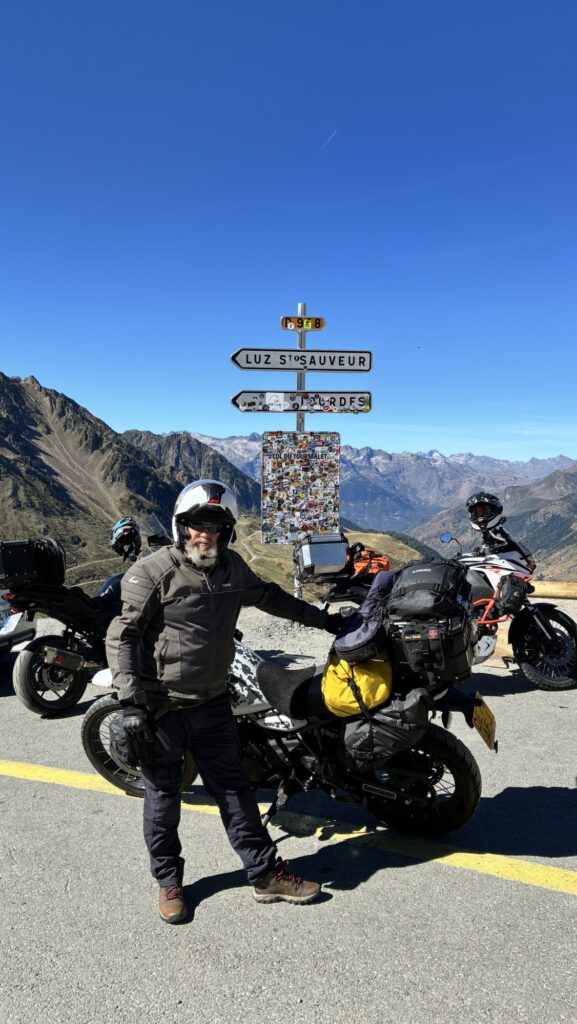
Not wishing to spend the day stood in a car park admiring a sign, I turned around and headed back down.
One thing genuinely surprised me.
The cyclists.
They were descending incredibly cautiously. I found myself riding along behind many of them at barely 30 km/h.
Back when my cycling friends and I tackled these sorts of descents, we’d routinely exceed 40 or even 50 mph while convincing ourselves this was entirely sensible behaviour.
Age brings wisdom.
Or perhaps just a growing appreciation of hospital waiting times.
Feeding Hungry Australians
Near the bottom I spotted a café and decided coffee was a necessity rather than a luxury.
A group of Australian cyclists were already there looking increasingly unhappy.
The reason?
The café had signs advertising sandwiches but wasn’t actually serving any food.
This appeared to have created a minor international incident.
They’d already ridden up the Tourmalet once and were planning to ride up again. Yet they seemed dangerously low on provisions.
Fortunately, I still had emergency supplies I’d been carrying around since Belgium. Out came the waffles and crisps.
I’ve never seen snacks disappear faster. They did offer me a coke in return, but I need to look after my figure, I wasn’t cycling!
The Australians were extremely grateful and assured me they wouldn’t starve. To be fair, there were several cafés further up the mountain, but hungry cyclists aren’t known for their rational thinking.
After a pleasant chat, I finished my coffee and left them to attack the mountain for a second time.
Voluntarily.
Australians are a different breed.
Back to Olargues
I arrived back at Elke and Norbert’s place while they were out enjoying the lake.
I pitched the tent, figured out how to get into the house and grabbed a shower before they returned.
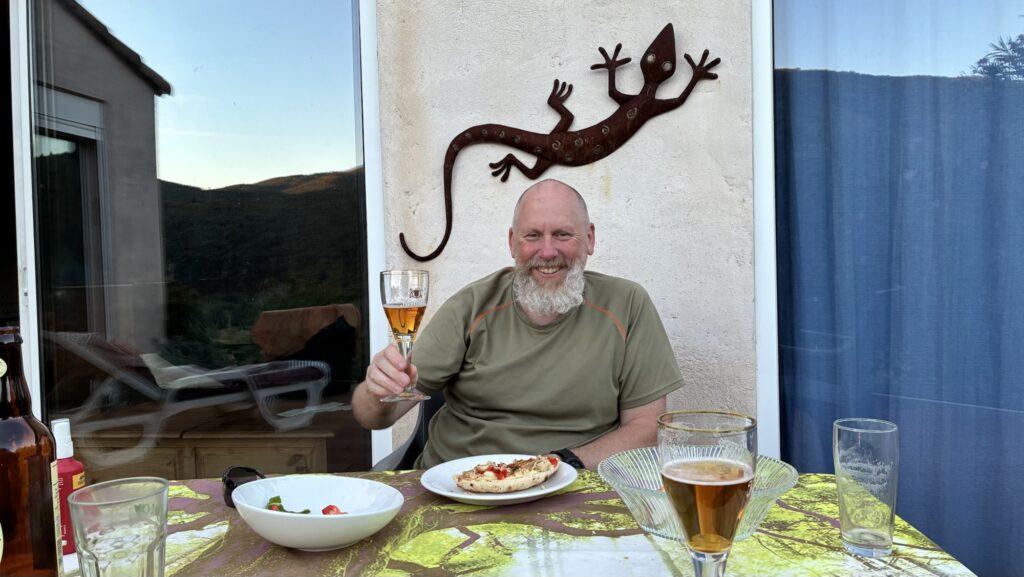
The evening was every bit as enjoyable as the previous one. Good company, good food and plenty of conversation. Sometimes it’s the people you meet rather than the places you visit that make a trip memorable.
I slept brilliantly.
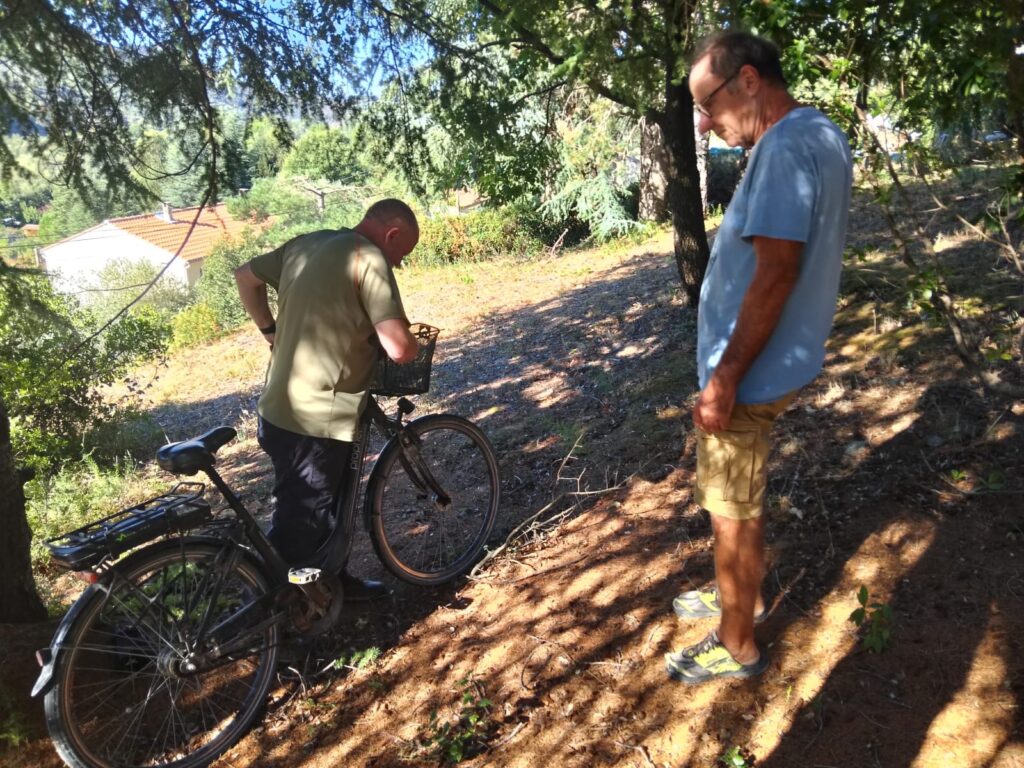
The next morning, after breakfast, Norbert asked whether I could have a look at Elke’s bike because the brakes weren’t working particularly well.
The pads were nearing the end of their life, but a quick adjustment transformed them from “approximately decorative” to “actually useful.”
Lessons Learned About Motorcycles
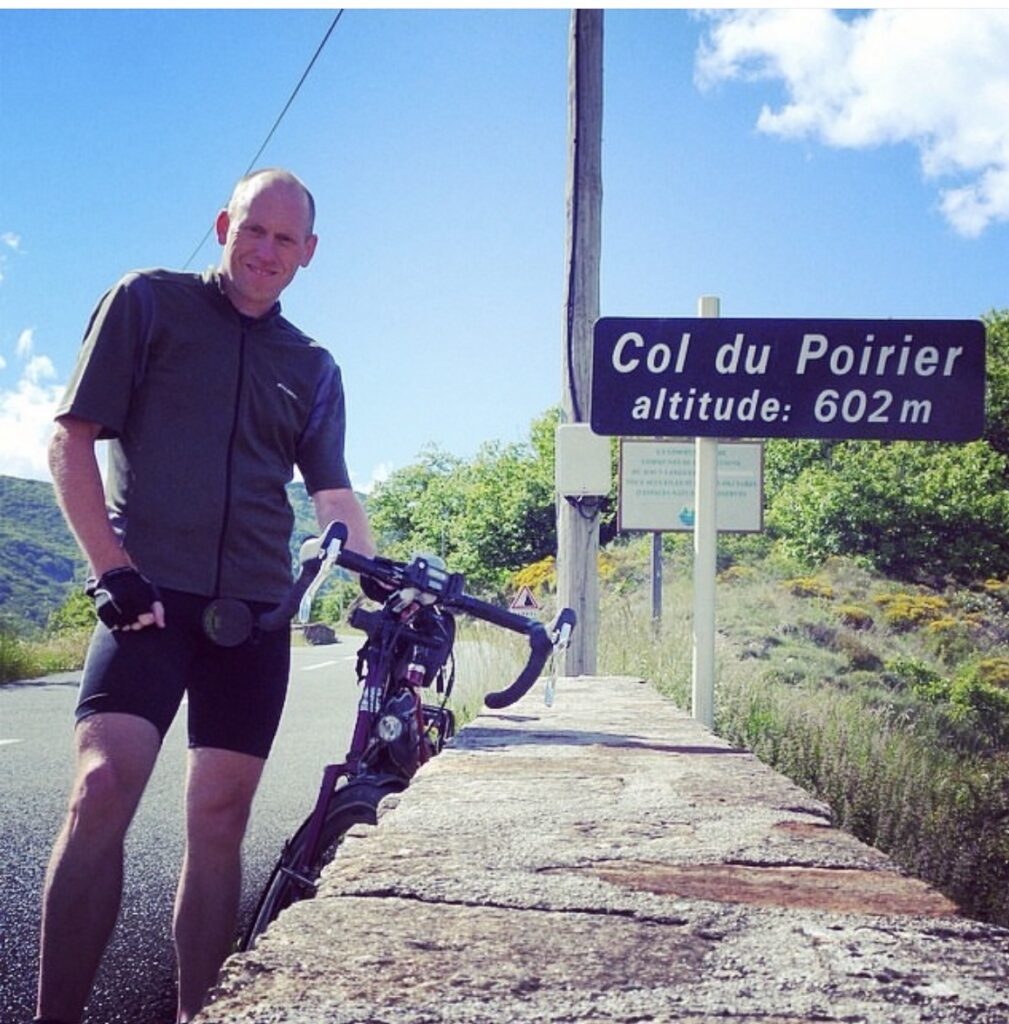
My next route took me over the Col de Poirer and Col de Fontfroide and along some fantastic roads beside lakes and through beautiful countryside.
During the ride I reflected on a challenge I’d deliberately created for myself before leaving.
The bike needed tyres, a chain and sprockets.
Rather than replace them in the UK, I’d decided it would be a good exercise to have the work done whilst travelling.
After all, if you’re planning bigger adventures, eventually you’ll need servicing and repairs away from home.
On a bicycle tour this is easy.
When I cycled to Africa, I carried spare chains, sprockets, brake pads, tyres, bottom brackets and all the tools needed to fit them. If something broke, I fixed it.
A motorcycle is a different beast entirely.
Parts are bigger.
Tools are heavier.
Everything is more expensive.
What I learned is that many motorcycle dealers don’t keep even common consumable parts on the shelf. Royal Enfield also informed me that fitting certain parts myself could affect the warranty.
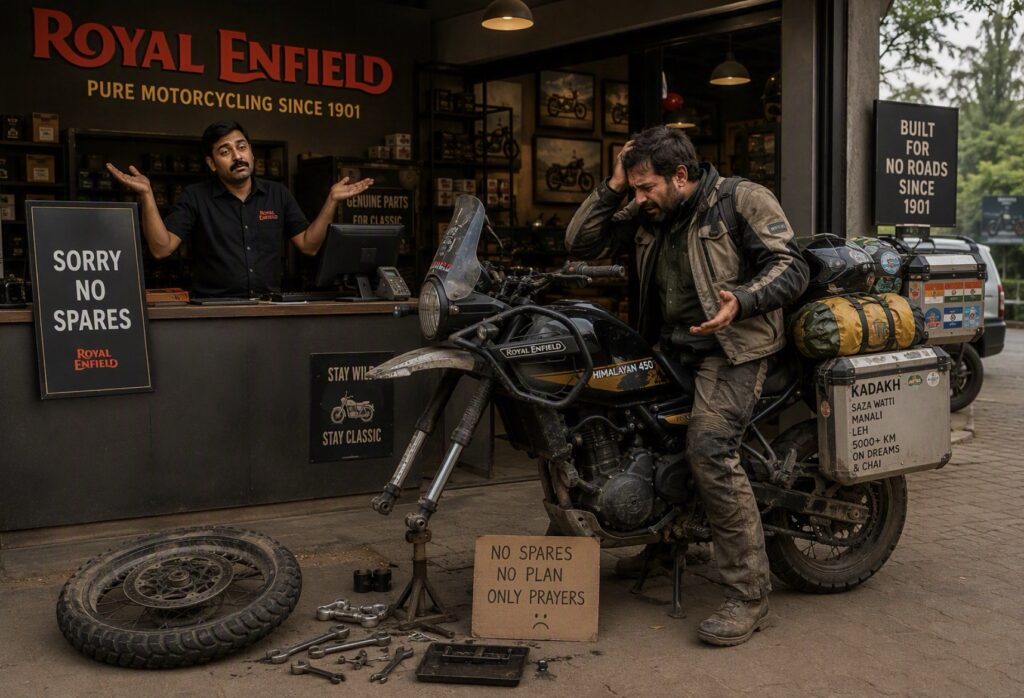
Even if parts could be ordered next day, finding workshop time was another challenge entirely. Most garages can’t simply drop everything because a traveller appears with an optimistic smile and a worn-out chain.
It was a valuable lesson.
If I ever do a really long motorcycle trip, planning maintenance well in advance will be absolutely essential.
It turns out “I’ll sort it when I arrive” isn’t a great strategy.
It’s merely a hope.
Homeward Bound
With the tyres and chain becoming increasingly worn, I decided to cut the trip short by a couple of days and head home.
I arrived at the Channel Shuttle in good time.
Unfortunately, just like the outward journey, something went wrong.
The departure time kept slipping further and further back.
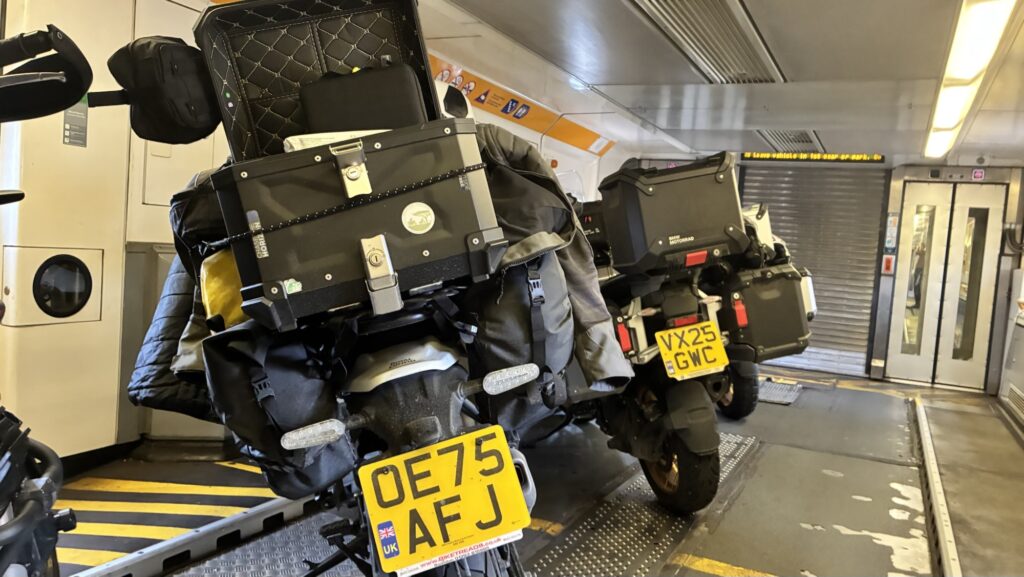
In future, I’ll save my money, have a beer on a ferry and watch France slowly disappear behind me.
Final Thoughts
Overall, the trip was a complete success.
Around 2,600 miles covered in ten days, with nine proper days of riding.
I revisited roads I’d first ridden on my journey to Cape Town, tackled some spectacular mountain passes, met interesting people, dodged cow-based hazards, fed hungry Australians and spent time with good friends.
Not bad for a week and a half.
Now comes the difficult part.
Planning the next adventure.


