Why Bikesafe?
Coming back to motorcycling later in life — in my 50s — comes with a strange mix of excitement and realism. Statistically (and depending on how those statistics are presented), riders in my age bracket are more likely to be involved in a serious or fatal accident. I work with data every day, so I know how easily numbers can be twisted to tell whatever story someone wants. But the statistic that motorcyclists make up roughly 2% of road users yet account for around 25% of road fatalities is one I can’t argue with, ignore, or explain away.
As a long‑time cyclist, I already understood vulnerability on the road. On a bicycle, interactions with traffic usually happen at lower speeds — and even then, a careless driver or a moment’s lapse can end badly. Add the higher speeds and forces of a motorbike, and it becomes painfully clear why the numbers look the way they do.
And as I’ve grown older, I’d like to think I’ve become more sensible (others may debate this). Part of that sensibility is recognising my limitations and understanding what I can do to reduce my risk. I work in a manufacturing environment where machinery can kill or maim in seconds. Health and safety isn’t a slogan — it’s a culture. Everyone must go home alive and uninjured. We strive for zero accidents at work, and it makes no sense not to strive for the same outside of it.
So there I was, fully aware that my personal risk rating was… high. The question was: what could I do about it?
Training was the obvious answer. I’d watched countless YouTube videos on improving riding skills, and many pointed toward further training with groups like ROSPA, the Institute of Advanced Motorists (IAM), or companies like Rapid Training, who recently partnered with Honda in pursuit of their ambitious — but admirable — goal of zero deaths in any Honda vehicle by 2050.
I’d also seen a video from the Motorcycle Action Group (MAG) reporting that some police forces were discontinuing their Bikesafe courses — a blow for the very group statistically most at risk of serious injury or death.
Thankfully, Wiltshire Police are continuing to run Bikesafe, and I managed to book a place for April.
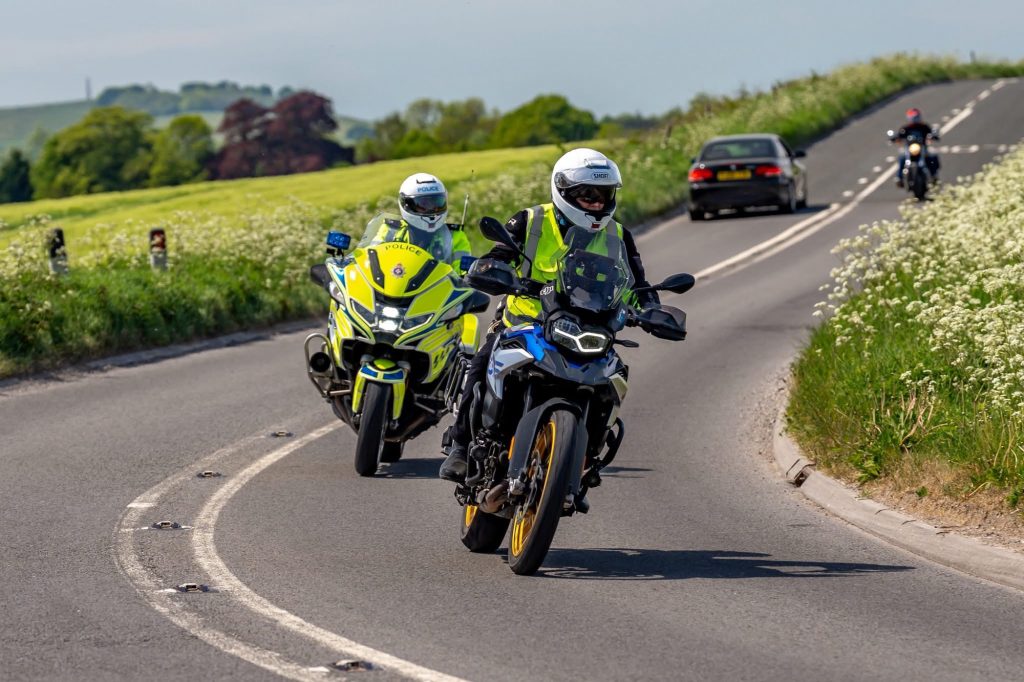
Before the Day: Online Training and Preparation
Once I’d booked and paid the very reasonable £78 fee (which included the online content), the anticipation kicked in.
A series of well‑structured emails arrived, guiding me to the online modules — a condensed, accessible introduction to some of the theory from the Police Motorcycle Roadcraft book. I worked through the modules over several sessions rather than in one long slog. That pacing helped: learn a bit, ride a bit, reflect a bit, repeat. By the time I finished, I felt primed rather than overloaded.
Then came an email from one of the instructors, John Hutchings, outlining what to bring: licence, insurance, a roadworthy and fuelled bike, food, a mug, and a pen. Naturally, I forgot the pen and mug.
Arrival: A Slightly Chaotic Start
The morning of the course, I planned to arrive early. Naturally, the universe had other ideas. The shop at the end of my road — where I intended to grab food — was closed for deliveries. That had never happened before. So I had to dash into town, grab supplies, and then ride to Police HQ.
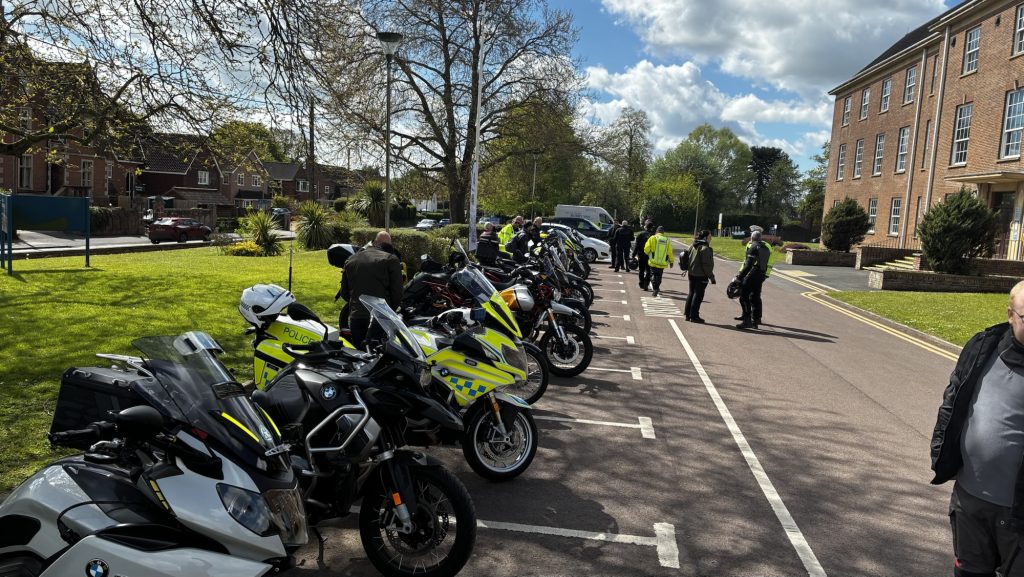
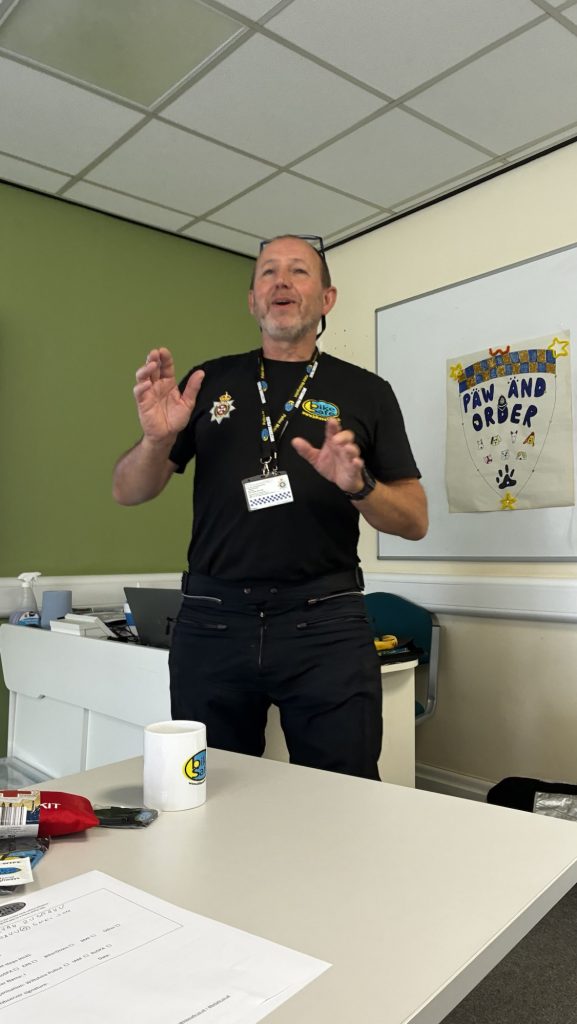
I still made it on time, but I arrived slightly flustered. Outside the headquarters was a long line of bikes, and a friendly officer greeted us before we were led into the classroom by our main instructor, Hutch.
After borrowing a pen (sheepishly), we got started.
Classroom Session: “I AM SAFE” and the Rider’s Mindset
One of the first topics was the rider themselves, using the mnemonic I AM SAFE — a simple but powerful checklist about whether you’re fit to ride. Fatigue, stress, illness, distractions… they all matter. You cannot ride well if your mind isn’t fully present.
This hit home immediately. I’d let the closed shop and the rush into town get under my skin. I’d hurried when I didn’t need to. Hutch had even emailed beforehand saying not to worry about being late. Yet there I was, letting something trivial affect my mindset before a day of training.
A timely reminder: your headspace is an essential part of your riding safety.
Out on the Road: Assessment and Real Learning
Once the classroom session wrapped up, we were assigned to our assessors — a mix of Police, ROSPA, and IAM riders. I was paired with another participant, and we were introduced to Frenchy, a police driving instructor who, by coincidence, had known my friend Steve’s dad, a long‑serving instructor based at Devizes HQ.
I took the lead first, heading toward Marlborough. I focused on applying the riding system as best I could — observation, positioning, speed, gear, acceleration and attitude — and was relieved when we reached the first stop.
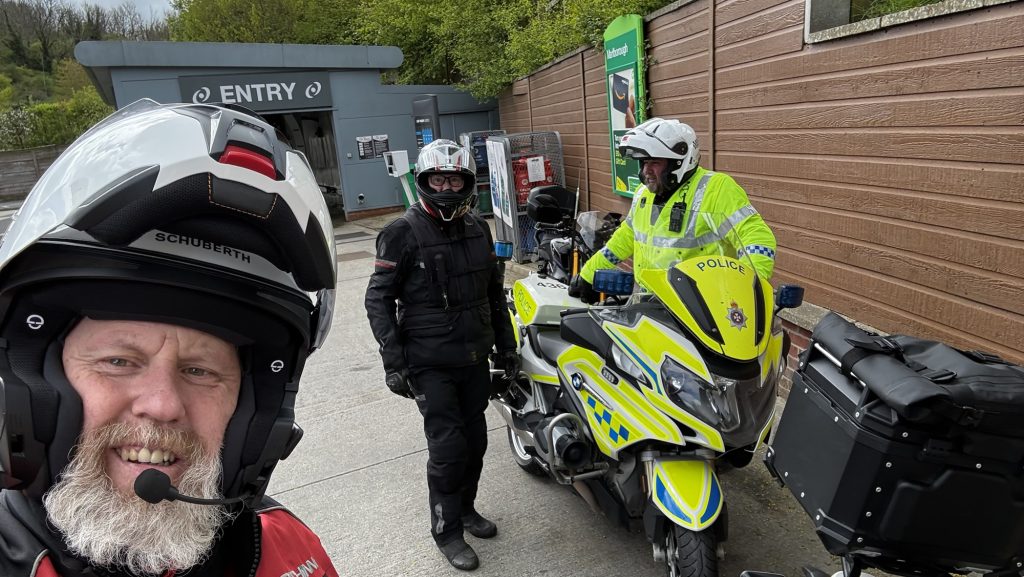
Frenchy’s feedback was encouraging: strong positioning, good hazard awareness, appropriate speed. He suggested I could carry more speed through corners. I’ve been cautious ever since once finding myself on the wrong side of the road mid‑bend, so hearing that confidence would bring speed — not the other way around — was reassuring.
We swapped over, repeated the process, then did another loop after a quick lunch and debrief. Another incident on the day, reaffirmed the need for these courses. The intended route was blocked. A collision between a motorcyclist a Landrover and another car. Subsequently, sadly the motorcyclist has passed away.
Back to HQ: Debrief and Next Steps
Returning to Police HQ, we regrouped in the classroom for a final debrief. We were given an overview of further training options with ROSPA and IAM, and encouraged to continue developing our skills.
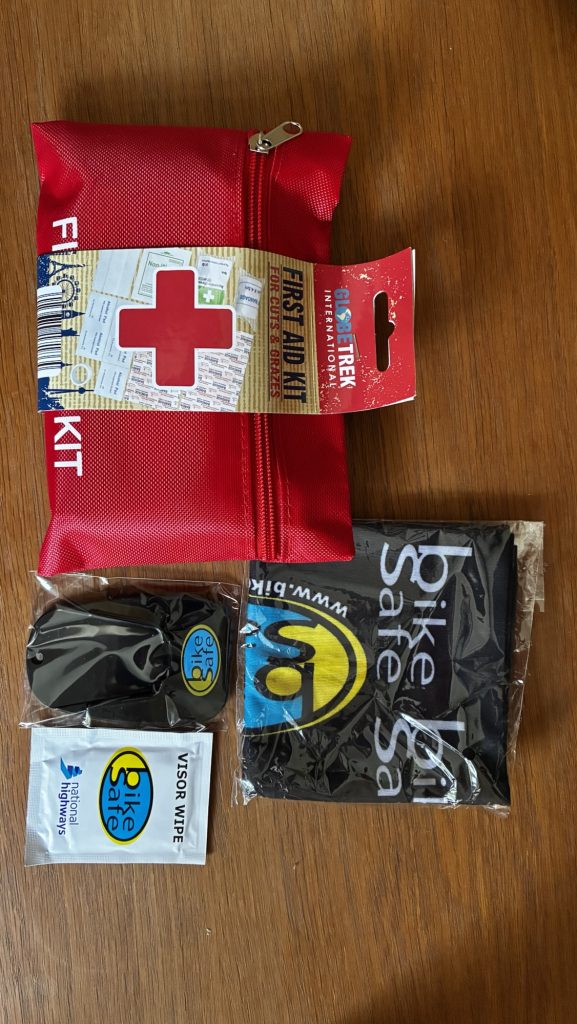
Then came the freebies (always appreciated), and that was the end of the day.
I left feeling genuinely uplifted. I know I still have a long way to go to become the rider I want to be — smoother, safer, more confident — but this was a solid start. I’ve already booked a taster session with IAM.
Onward, upwards, and upright.
A huge thank‑you to John Hutchings, Frenchy, and all the assessors — many of whom volunteer their time to help riders like me.
Final Thoughts
No matter where you are in your motorcycling journey — brand new, returning, or decades in — I cannot recommend Bikesafe highly enough. It’s an essential service, delivered by people who genuinely care about keeping riders alive.
If it helps even one of us avoid becoming a statistic, it’s worth every minute.


Brilliant, well written and convincing – can’t recommend the RoSPA training enough, it’s been good in so many ways for me! See you there soon Gary!! 1st Saturday of the month 9.30am REME museum. Lyneham. Test rides always welcome
Thanks 🙂
Wow! This is a fantastic message and, as a volunteer observer, makes it even more worthwhile!
Great write up, thank you!
Also mid-50s and just getting back in to biking after a 15yr absence so feeling a little rusty.
I’ve signed up and got my Bikesafe course booked for the weekend after next 🙂
Not sure how well I’ll get on riding my old 2001 GSX-R for three hours on the day though lol.
Thanks Rich, I’m sure you’ll enjoy it. Ride Safe.